A solar option can be worth discussing when a garage is remote from an existing power supply. It should be assessed as a complete compatible door and power system, rather than as a panel added to any electric motor. The useful questions concern the site, how often the door is used and what happens when stored energy is low.
Clarify how the proposed system is powered
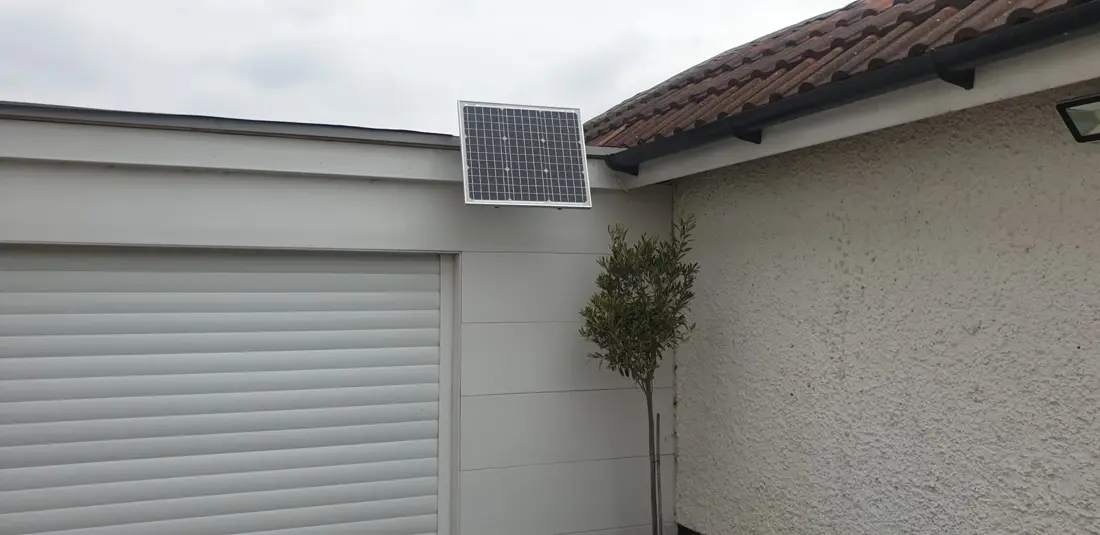
A solar charging arrangement uses a panel to collect energy and a battery to store it for later use. That storage is what allows a compatible door to operate when the panel is not generating at that moment. The controller, battery and motor must be suitable for one another.
Ask whether the particular proposal is independent of the mains, uses another charging arrangement, or has specific backup requirements. Do not assume that every product described as solar has the same configuration. Our solar garage door page provides a route to discussing what can be supplied for your property.
Look at the site across the year
A panel position that looks sunny on one afternoon may be shaded by a roof, tree or neighbouring building at other times. The installer needs to consider the proposed panel location, mounting access and the conditions the system will face, including less favourable periods.
Explain how frequently the door opens and closes, whether use is likely to increase and whether the building is left unused for long periods. Battery capacity and charging conditions need to be assessed against that expected use. Avoid relying on an unqualified promise of unlimited operation in all weather.
Discuss access if the battery cannot operate the door
A solar charging battery is not automatically the same thing as a separately specified battery backup. Ask the team to explain the normal energy source and the emergency arrangements in plain language.
If the garage has no second entrance, access during a fault or low-charge condition needs particular attention. A suitable manual override or other manufacturer-approved arrangement should be discussed for the chosen installation. Keep the instructions and any supplied access keys available, and do not improvise a release method.
Compare the complete long-term proposal
Ask about battery care, replacement availability, the recommended maintenance schedule and the support provided for both the door and the power equipment. The practical cost of a proposal includes these details as well as the initial installation. A panel should not be presented as eliminating every future maintenance expense.
Take the same care over the door’s dimensions, headroom, finish and safety arrangement as with other electric roller doors. Send your postcode, photographs and expected use when you request advice. That lets the team assess a solar option alongside other suitable ways of operating your garage door.