The best garage door for your home starts with how the space works. Where do you park? What is stored near the ceiling? Is the garage attached to the house? Comparing the opening mechanisms is more useful than choosing by appearance alone. Here is how three common door types differ, and what to check before you request a quote.
How each door opens
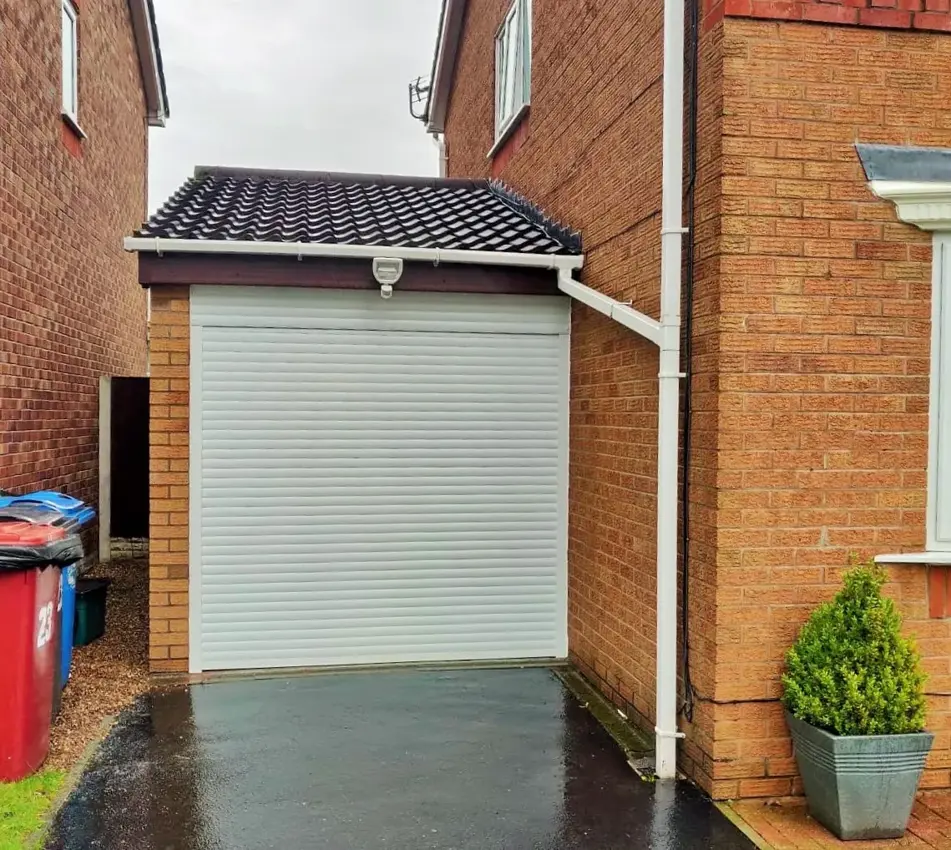
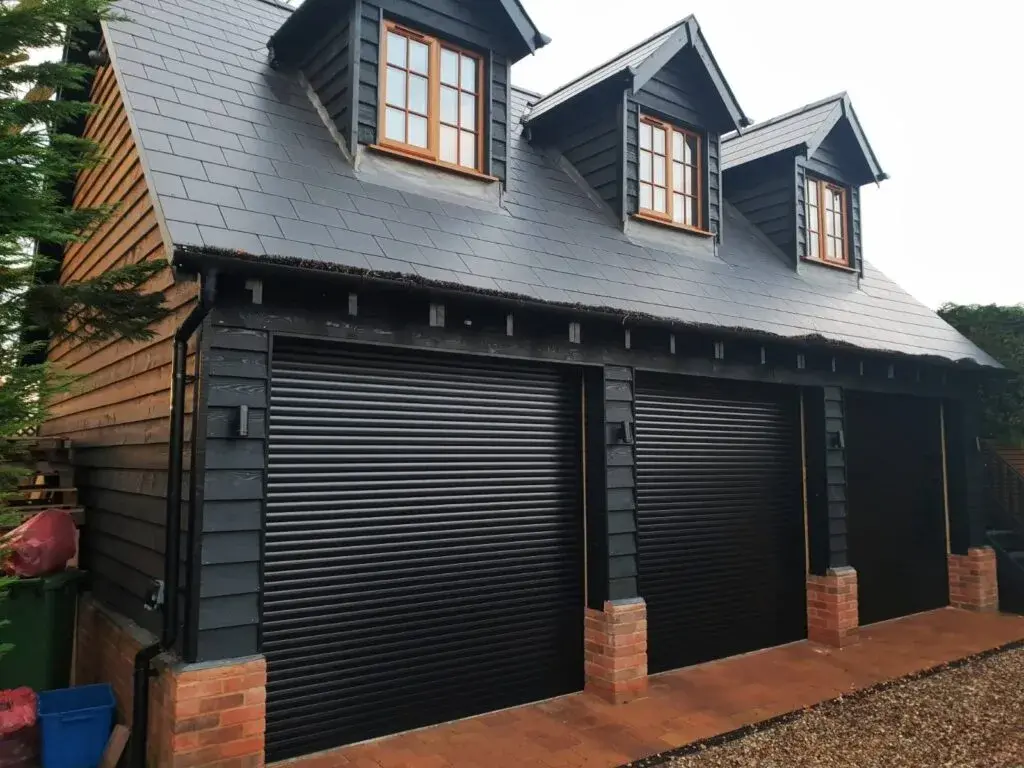
A roller garage door uses a curtain of connected slats that travels vertically and coils above the entrance. It keeps most of the ceiling free of long horizontal tracks, although the roll and its cover still need room above the opening.
A sectional garage door has larger hinged panels that usually rise vertically and then travel back along overhead tracks. An up-and-over door moves as one main panel. Its gearing determines how it swings and where it rests, so check the actual movement of the model being considered.
| Door type | Where the open door sits | A useful question |
|---|---|---|
| Roller | In a roll above the entrance | Will the roll fit without restricting the height I need? |
| Sectional | Usually along tracks beneath the ceiling | Will tracks and the operator clear lights, storage and roof timbers? |
| Up-and-over | As a single panel overhead | How much room does the panel need outside and inside while moving? |
Think about the driveway as well as the garage
A vertically opening door can be helpful when a car is parked close to the entrance. Roller and sectional doors generally avoid the outward sweep associated with many up-and-over arrangements. However, the usable entrance is still determined by the installed frame, guides and fitting position.
Look at your ordinary routine rather than an empty garage. Leave room to walk past a parked car, carry shopping and use any side entrance. If width is the priority, compare the drive-through width on the finished quotation, not just the width of the brick opening.
Check the ceiling and the building
Lights, beams, shelving and a low roof can change which arrangement is practical. A roller door needs sufficient headroom for its roll, while a sectional arrangement typically needs clear space further into the garage. Neither type suits every opening simply because it opens vertically.
A replacement also depends on the condition of the building and its fixing surfaces. A competent survey should consider the lintel, walls, floor and any obstructions. Our guide to low-headroom garages explains which measurements help that conversation.
Compare the complete specification
Insulation, seals, controls and security depend on the chosen product and installation. A category label alone will not tell you how a particular door performs. Ask about the curtain or panel construction, emergency operation, safety arrangements, finish and aftercare.
For a roller option, explore our made-to-measure garage doors and insulated roller doors. Then send your approximate dimensions and postcode. A useful quotation explains why the proposed door suits the opening and identifies any work needed before installation.